
Object Record
Images
Metadata
Title |
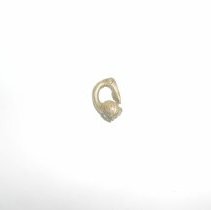
Ashanti Gold Weight |
Object ID |
2007.1.32 |
Collection |
AFRICAN |
Object Name |
Weight, Balance |
Material |
Metal |
Dimensions |
H-2.2 W-1.7 cm |
Description |
Brass weight in the form of a bird with it head bent towards its back, this is a representation of adinkera symbol known as sankofa which is a bird flying forward but looking back which means we must go back to our past and bring back what is useful. Ashanti weights, or Abrammo as they are sometimes known, were found in West Africa's Gold Coast area, now known as Ghana and started in the 15th century. The weights were used to measure out specific quantities of gold and gold dust, which was mined and panned in great quantities within the kingdom and used for trading with outsiders, for making personal adornments, and as an internal currency. The weights and their accoutrements such as boxes, spoons and balances were known as a futoo and wrapped together in cloth. They would then be put into a leather container, a wood box, or if the owner was a wealthy man, a cast-brass kuduo box. The weights are found in various shapes and forms; the average collection of weights was thought to be about forty, with no specific 'sets' of uniform patterns or motifs. All metalworking in the Ashanti region was done by goldsmiths, The iconography of Ashanti gold weights is fairly uniform, mainly because the weights were produced by the same small group of smiths. The weights themselves were made of brass, usually obtained through trade in European imports from the late 15th century onwards. The weights were cast using the lost-wax method, the best way of preserving fine modelling and detail. The goldsmith made a beeswax model of the weight and covered it with thin layers of clay, brushed on with a feather. The clay was then baked, which caused the wax to melt and run out. The clay was then used as a mould for the bronze: both were encased in a large aubergine-shaped clay mould with the original smaller clay mould at the top and the bronze sitting on the bottom, and then placed in the furnace. When the bronze was molten, the smith turned the mould upside down, so the bronze ran into the small clay mould below. The mould was later destroyed to reach the bronze weight. The pattern and shape of each weight carries a different meaning, often related to the myths, proverbs and customs of the Ashanti culture. Early geometric patterns are thought to be derived from North African Islamic tradition and may represent fractions or counters, while the comb design signals a gift from a woman to a man. Pyramid forms based on Islamic prototypes were also popular, as were sword-shaped weights which symbolised heroism and strength. The ship's wheel shaped weight is thought to date from the 18th or 19th century and to celebrate new trade. Source: http://www.hunterian.gla.ac.uk/collections/object_month/ashanti/index.shtml |
Credit line |
Courtesy: The Institute of Jamaica |
Legal Status |
This image can be used for educational purposes without restrictions. A higher quality image may attract fees. |
Provenance |
Africa |
Web Rights |
In Copyrights |